In this episode of Wildlife Quests, I speak with Morningstar Khongthaw, founder and chairman of the Living Bridge Foundation, about one of the world’s most fascinating examples of bioengineering: the living root bridges of Meghalaya, India.
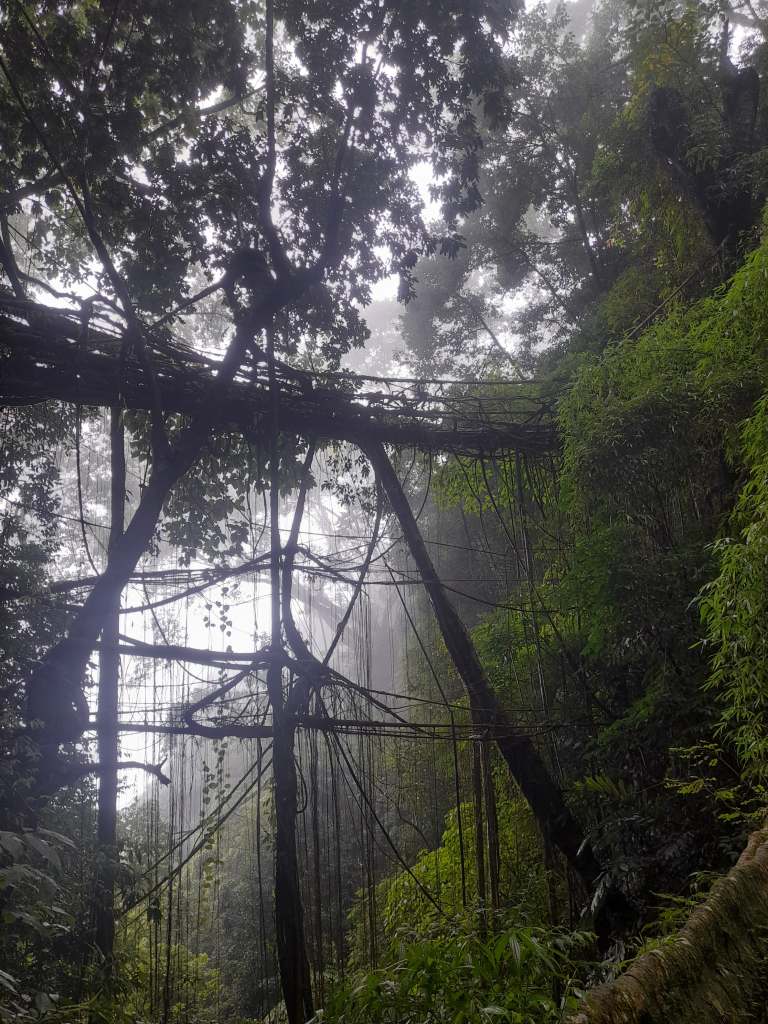
These bridges aren’t built they’re grown.
🌧️ A Landscape Shaped by Monsoons
Meghalaya is one of the wettest places on Earth some regions receive over 26,000 mm of rainfall annually.
To adapt to this extreme environment, the indigenous Khasi and War communities developed an ingenious solution: bridges made from the living aerial roots of rubber fig trees (Ficus elastica).
These bridges are not just cultural relics; they are functional, living structures that communities still use today.
🌱 How the Bridges Are Made
Root bridges are created by training the aerial roots of fig trees across rivers and ravines using bamboo scaffolding.
The roots are guided not forced into position during the monsoon months when they are most pliable (June–September).
Not all roots can be used only specific young roots, often 1–2 years old, are suitable for weaving.
It can take 30–40 years for a bridge to become fully functional, but the older they get, the stronger and more resilient they become.
The process also extends to other structures: root ladders, swings, tunnels, and platforms are part of the same architectural tradition.
🌉 Types and Scale of the Structures
Today, over 130 living root bridges have been mapped and documented in the region.
The structures vary greatly in size and complexity:
Single-decker, double-decker, and even triple-decker root bridges exist.
One of the bridges is considered the longest known living root bridge, stretching 53 meters in length and 30 meters high above the stream.
These structures are in continuous development and roots are still being woven, strengthened, and grown even after decades of use.
🌍 A Heritage at Risk
With increased tourism and climate change, many bridges face degradation.
Morningstar initially worked in ecotourism, but shifted to conservation and education after seeing the damage from overuse.
He founded the Living Bridge Foundation in 2018 to:
Recognize and honor the elder root architects.
Train new generations in root weaving.
Work with local landowners and government officials to adopt and preserve bridges.
Establish Heritage Committees community led groups of landowners and custodians who manage the root bridge sites sustainably.
🌳 Personal Connections and Conservation Wins
Morningstar shared the emotional story of saving an ancient tree known locally as the “Avatar Tree” from being chopped down for charcoal.
He successfully negotiated with the landowner to adopt the tree as a gift, preserving a critical part of the ecosystem and community heritage.
His organization now helps manage over 30 root bridges, including some of the most famous and structurally complex ones.
📺 Media & Global Interest
Morningstar has collaborated with major media outlets including:
BBC’s Human Planet and Green Planet
National Geographic
French TV and international filmmakers
While root bridges are most prominent in Meghalaya, similar traditions exist in places like Indonesia, Papua New Guinea, and Peru.
Click to Listen Now ↓


 itsawildlife.blog
Leave a comment