🎧 Click here to Listen to the full episode of Wildlife Quests
New Zealand is home to two of the world’s most endangered marine mammals Māui and Hector’s dolphins. In our latest podcast episode, we sat down with Christine Rose, the passionate founder and chair of Māui and Hector’s Dolphin Defenders, to discuss her decades-long mission to protect these rare species.
New Zealand’s Hidden Treasures
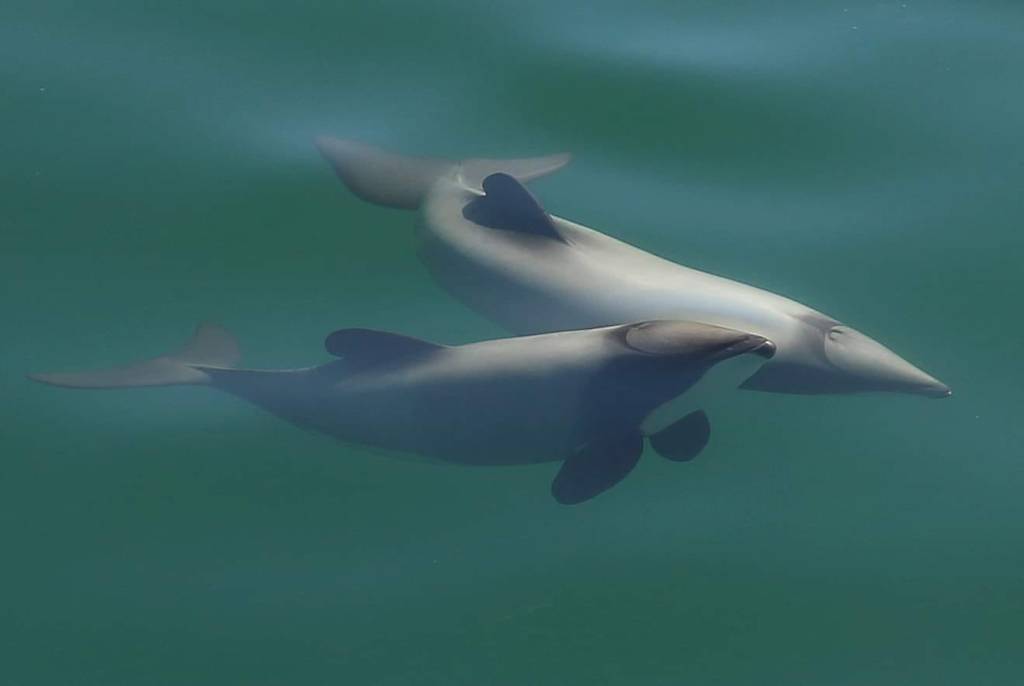
Māui and Hector’s dolphins are the smallest dolphins in the world, found only in New Zealand’s waters. Their rounded dorsal fins, often likened to Mickey Mouse ears, and their striking gray coloring set them apart from other dolphins. Christine fondly describes newborn calves as being no bigger than a rugby ball, making them a true national treasure.
These dolphins live close to shore, meaning lucky beachgoers can spot them playing in the surf. However, their populations are critically low, with Māui dolphins estimated at only 54 individuals remaining. Hector’s dolphins, though slightly more numerous, face the same threats some local populations have dwindled to as few as 30 individuals.
The Deadly Cost of Fishing
Christine exposes the harsh reality of the fishing industry’s impact on these dolphins. Set nets remain legal in key habitats, allowing tragic losses to continue. In Kaikōura, a heavily pregnant female and another dolphin were killed within a single month, wiping out not just individuals but future generations.
Despite advocacy efforts, trawlers are permitted to fish within 100 meters of shore, leading to a 600% increase in reported dolphin deaths since cameras were installed on vessels. Shockingly, government policies allow 20 Hector’s dolphin deaths annually in Canterbury alone, disregarding their fragile population numbers.
Holding the Industry Accountable
One of Christine’s biggest victories was pushing for onboard cameras on fishing boats, forcing the industry to report dolphin deaths. The first year of implementation revealed 12 out of 15 deaths in the 2023-2024 season were caused by bottom trawling proof that industry-approved “mitigation measures” are failing.
The fight remains ongoing, with political opposition to expanding camera usage, attempts to hide footage, and continued government inaction despite international pressure. Christine and her team are tirelessly working to force stronger protections before it’s too late.
The Dark Side of Dolphin Tourism
While dolphin tourism in Akaroa Harbor contributes over $24.5 million to the Canterbury economy, it poses additional challenges to the species’ survival. Tour boats actively pursue dolphins, drop swimmers into their habitat, and disrupt their natural routines. Christine compares it to “having strangers barging into your home you might entertain them for a while, but eventually, you’d leave.”
The constant human interaction is pushing these dolphins further out of their usual territory, adding another layer of stress to their already fragile existence.
The Call for Action
Christine Rose’s work sheds light on the urgent need for stronger protections, better industry accountability, and a shift in how we interact with these remarkable creatures. Without immediate intervention, Māui and Hector’s dolphins risk disappearing forever.
As listeners, we have the power to support conservation efforts, push for policy changes, and rethink our impact on marine life.
If you want to learn more about Christine Rose’s organization or support the movement to protect New Zealand’s native dolphins, check out Māui and Hector’s Dolphin Defenders.
Want to See Them in the Wild? Here’s How!
If you’re in New Zealand or planning a visit and dream of spotting a Māui or Hector’s dolphin, the best way to do it is simply to be patient and observe nature as it unfolds. Unlike commercial tours that actively seek out dolphins, the most sustainable way to see them is to visit coastal areas and watch the waves.

Where to Go
Christine Rose recommends any coastline in the South Island for a chance to see Hector’s dolphins. Some great spots include:
Curio Bay – A stunning location with frequent dolphin sightings.
North of Kaikōura – Specifically Haku Beach, where dolphins are often seen.
Kaikōura Township – You can stand right on the beach and spot inshore Hector’s dolphins playing in the surf.
Lyttelton Harbour – Christine recalls spotting a Hector’s dolphin swimming freely, proving that simply looking can bring magical moments.
The Beauty of Wild Nature
Unlike guided tours, this method ensures that dolphins remain undisturbed in their natural habitat. Instead of demanding an encounter, Christine emphasizes that wildlife should reveal itself on its own terms not on a schedule.
It might require patience and time, but standing by the ocean, soaking in New Zealand’s beauty, and waiting for nature’s surprises is the most rewarding experience.
Ditch the commercial dolphin tours, save your money, and embrace the thrill of seeing them where they truly belong free in the wild.
Click to Listen Now ↓


 itsawildlife.blog
Leave a comment