Sitting down with both Karla Munguía Colmenero and Theresa Demarest for your podcast was a powerful moment they each bring unique perspectives and incredible passion to the story of Keiko.
Listen to the full podcast here
Karla Munguía Colmenero is a wildlife filmmaker and conservationist from Mexico, deeply committed to educating the public about the natural world. She has dedicated herself to storytelling that highlights important environmental and ethical issues, with a particular focus on wildlife protection. As the Mexican ambassador for Keiko: The Untold Story, Karla plays a critical role in ensuring that people understand the legacy of Keiko beyond just the Free Willy film. Her passion stems from her personal connection to Keiko, whom she saw as a child in Mexico. She has been a strong advocate for ending orca captivity and promoting marine conservation.
Theresa Demarest is an independent filmmaker, musician, and producer based in Oregon, USA. Her career has spanned multiple roles she has been a singer-songwriter, a critical care nurse, and even a motorcycle enthusiast. As a cancer survivor, her experience with Keiko was deeply personal, and she channelled that connection into music and filmmaking. Theresa became the director and creative force behind Keiko: The Untold Story of the Star of Free Willy, a documentary that provides an unfiltered look at Keiko’s real journey and legacy. Her music played a significant role in raising awareness, and she worked closely with the Free Willy-Keiko Foundation to tell Keiko’s story in an authentic way.
The fact that you sat down with them for your podcast is significantit means you had the opportunity to engage with two individuals who have dedicated their lives to conservation, storytelling, and raising awareness about marine life. Your conversation with them adds depth to the ongoing discussion about ethical wildlife treatment, education, and the influence of films like Free Willy on public perception.
How does it feel to have interviewed such passionate advocates? I’d love to hear your thoughts!
Theresa Demarest shared a deeply personal connection to Keiko, explaining how she first encountered his story while battling a life-threatening illness. Watching Keiko’s move from Mexico to the Oregon Coast Aquarium became a profound moment for her. She was struck by Keiko’s presence and his ability to communicate with people, recounting a powerful experience where Keiko deliberately interacted with her in a way that felt almost intentional. Inspired by this connection, Theresa, a professional musician and former critical care nurse, composed Keiko’s Dream and went on to work closely with the Free Willy-Keiko Foundation to bring his story to audiences. She described the challenges of making the film and the resistance she faced from those who didn’t want his full story told. Despite the obstacles, she remained dedicated to showing the world who Keiko truly was and how his legacy continued to inspire.
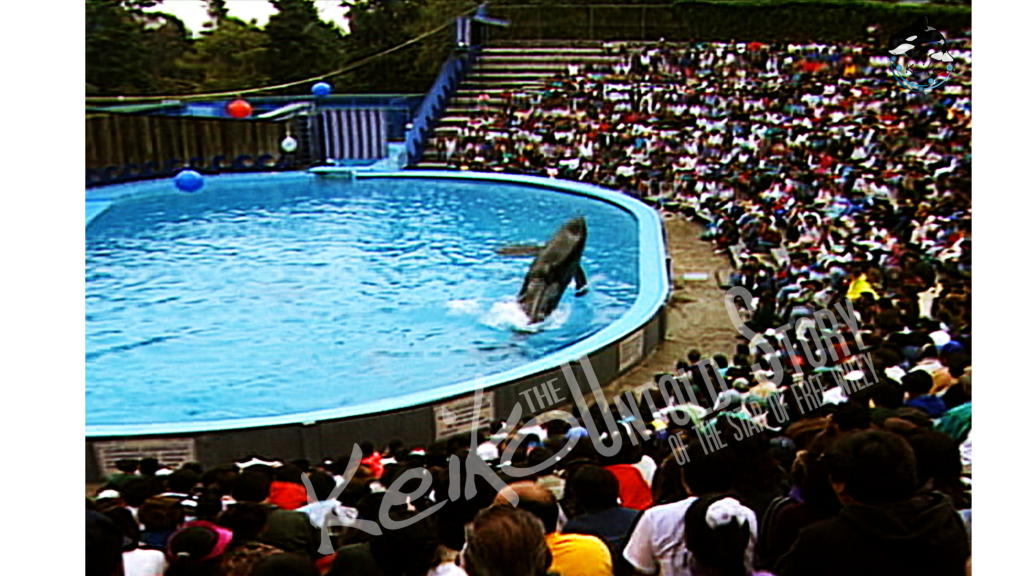
Theresa explained that Keiko’s story is vastly different from the Free Willy film. While Hollywood crafted a fictionalized tale, she wanted to follow the real-life journey of Keikoan orca who had bonded closely with humans after being captured at a young age. At just two or three years old, he was still learning survival skills under his family’s supervision when he was taken. He spent around 11–12 years in Mexico, performing tricks at Reino Aventura. When the filmmakers of Free Willy discovered him, they were shocked to see his poor health he was underweight and suffering from severe papillomavirus burns.
The Free Willy movie brought attention to his plight, but Keiko remained in captivity. Theresa’s documentary sought to tell his storynot the fictionalized version. She shared that obtaining permission and footage for her film was incredibly difficult, as some people resisted its production.
Keiko was an unusual orca because of his deep bond with humans. Even after being moved to the Oregon Coast Aquarium, he remained interactive“holding court” as he engaged with visitors. Initially, there were plans to limit human interaction, but he sought it out on his own. The Free Willy narrative and Keiko’s actual experience could not have been more different, but in many ways, he was the luckiest whale in the worldhis name even meant “lucky one” in Japanese.
Karla Munguía Colmenero
Karla emphasized that Keiko’s story was not in vainit showcased his strength, determination, and resilience. Despite his challenging background, he kept swimming forward, proving his character. She expressed deep admiration for Keiko’s spirit.
One of the major conservation impacts was Iceland’s decision to stop capturing orcas and hunting whales following Keiko’s arrival there. His presence also led to increased research on North Atlantic orca populations, providing valuable insights that were previously unavailable. His legacy continues to highlight the importance of keeping orcas in the wild, where they can thrive naturally.
However, Karla pointed out that orca captivity is still an ongoing issue, with approximately 55 orcas still held in captivity worldwide, 33 of which were born in tanks. She hopes that conservationists and environmentalists will successfully establish proper sanctuaries where captive orcas can retire with dignity. She mentioned Shamin, an orca in Argentina who has spent 32 years in a small pool, as an example of the cruelty that persists.
Despite powerful documentaries like Blackfish and The Cove, the captive marine mammal industry remains active, with people still buying tickets for dolphin interactions in places like Mexico. Karla stressed that education is the keyteaching the public that these intelligent creatures belong in the ocean, living freely in their natural societies.
Keiko’s life
- Born: Around 1976 in the Atlantic Ocean near Iceland.
- Captured: 1979, taken from his family at a young age.
- Moved to Canada: 1982, transferred to Marineland in Ontario.
- Sold to Mexico: 1985, moved to Reino Aventura, where he lived in a small tank and performed for visitors.
- Starred in Free Willy: 1993, bringing worldwide attention to his story.
- Rehabilitation Efforts Begin: 1995, as efforts were made to improve his health and secure a better environment for him.
- Moved to Oregon Coast Aquarium: 1996, where he received medical care and was prepared for potential release.
- Moved to Iceland: 1998, placed in a sea pen to acclimate to a natural habitat.
- Interacted with wild orcas: 2001, showing signs of adaptation to life in the open ocean.
- Left his sea pen: 2002, traveled to Norway, spending time on his own before interacting with locals.
- Died: December 12, 2003, at the age of 27 due to pneumonia.
Keiko’s journey was groundbreaking, demonstrating the possibilities and challenges of rehabilitating captive marine mammals. His legacy continues to inspire conversations around conservation and ethical treatment of wildlife.


Click to Listen Now ↓


 itsawildlife.blog
Leave a comment